
The Ancient Sacred American Bird That Traveled The World: A Turkey Tale
Every thanksgiving I remind people to give thanks for the bird that sits at the center of most american dinner tables. Today I shall tell you of it’s ancient past and it’s historic journey around the world.
Part 1. Turkey: What’s in a name?
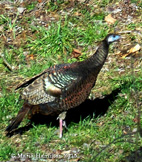 In the 1500s, Portuguese traders brought back a bird from Guinea in West Africa. It was then referred to as the “Guinea” Fowl. Meanwhile, returning Spanish conquistadors also brought back a strange looking bird from the new world, which Europeans also began to call “Guinea Fowl”. After much confusion and likely a few customer complaints following receipt of the wrong birds, they decided these two needed different names. During this time the Turks were busy building the Ottoman empire, territory which included much of Northern Africa and vast trade networks which supplied many goods to Europeans, likely including the new world bird that would come to be called “Turkey”. Carl Linnæus, the Swedish Dr, botanist and zoologist known as the father of taxonomy then incorporated the misnomers by calling the turkey “Meleagris”, Greek for “Guinea Fowl”. I don’t know how much they actually knew then, but the turkey is now presumed to have possibly shared an ancestor with the peacock, so the turkey species became recorded as “Meleagris gallopavo”. The specific name is a combination of the Latin words for cock (gallus) and peacock (pavo).
Part 2. Turkey Origins.
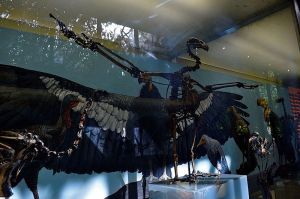
There are currently six subspecies of Meleagris gallopavo as well as two extinct turkey species, one whose fossils have been found in california tar pits dating back to the Early Mieocene era, 23 million years ago. Yes, the wild turkey, the ancestor of our modern domestic turkeys, walked the earth, looking much the same as we know it today, millions of years ago. While some undiscovered or ancient birds may beat this record, the longest known lifespan of a wild turkey is 13 years. That equates to well over a million generations of turkey families doing their thing- flocks foraging for food, males strutting for mates, hens filling and protecting shared nests, and all of them doing their best to survive an ever changing world of predators.
Current research believes that the modern domesticated turkey originated with the south Mexican wild turkey, Meleagris gallopavo gallopavo, and while they don’t know exactly when, the turkey is believed to be the first bird ever domesticated in the americas. Both the ancient Aztecs and the Mayans were raising turkeys over 2300 years ago and possibly as early as 800BC, including hundreds of miles away from the ancestral mexican turkey’s native range. It was from the Aztecs that the Spanish first received the turkey and would send it on it’s journey around the world. Cortes described the streets set aside for poultry markets in Tenotichtlan (Mexico City), and the Franciscan Motolinia noted that over 8,000 turkeys were sold every five days, all year round, in Tepeyac, just one of several suburban markets of the city.
Part 3. The Ancient Sacred Turkey
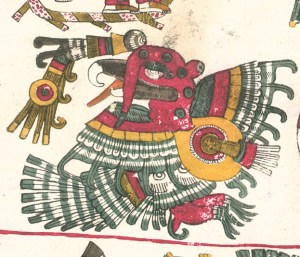
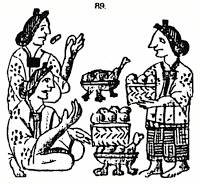
The turkey plays a role in Aztec mythology, and Tezcatlipoca the trickster god had a manifestation as Chalchiuhtotolin, “the jeweled bird”, a god of plague and purification. God of plague seems like a bad epitaph for such a beautiful bird, but diseases capable of migrating from animals to humans, such as avian flu, are well known to occur alongside domestication of animals. Turkey hens were ‘totolin’ and males were ‘huexolotl’. The Aztecs like to eat turkey stews spiced with tamales, including a popular dish called totolmolli, turkey hen with molli sauce. Turkeys would also be given as tribute to Aztec rulers and traveling merchants would offer them to give thanks for safe travel. So really, the ritual of sacrifing and sharing a turkey as a form of ‘thanks-giving’ predates ‘pilgrims & indians’ by several hundred years.
 Turkeys became similarly important to the classic Maya, who also favored turkey stew and other dishes. Deep within the massive stone Jaguar Paw Temple at the ancient Mayan city of El Mirador in Guatemala, scientists have found the bones of all seven members of Meleagris gallopavo. The turkey bones being found in a ceremonial area of a special pyramid complex give it far greater context than a simple meal. It suggests that turkeys were a special offering with deep religious symbolism, often brought from very long distances. Some believe they were the dedicated meals of Mayan priests and artistocracy. Today we also can find the turkey, particularly the Ocellated turkey, in glyphs and art, adorning ancient temple walls and Mayan manuscripts. I also have no doubt that they would made use of the wonderful colored feathers for their ornate headdresses and other fashion. What is for sure is that the Turkey had a place of honor, both on the table, and in the beliefs of the Mayan and Aztec peoples.
Domesticated turkeys traveled just as far and wide across the old americas as they eventually would across europe and asia. The Pueblo peoples are now know to have raised turkeys. Natives of the American Southwest used domesticated turkeys for feather blankets, prayer sticks and ritual instruments. Turkeys also appear in a variety of Native American folklore and legends. In some legends, the Turkey is a wiley, overly-proud trickster, which also sounds quite a bit like the Aztec view. In other stories, turkey is shy and elusive. The Akimel O’odham (Pima) people consider turkey a rain spirit, with turkeys being able to predict the weather. Turkeys are also used as clan animals in some Native cultures such as the Creek tribe, the Shawnee, the Navajo, Zuni and Pueblo. Turkey feathers are traditional regalia among many tribes, and the Turkey Dance is also important to many. I can’t say for sure, but watching Cherokee women dance, I certainly see the influence of the wild turkeys cautious stepping walk. There is also a Turkey Kachina, Koyona, among the Hopi Kachina Dancers.
The Turkey has always had a place of honor in the Americas.
When you celebrate Thanksgiving today, remember to give thanks for the honorary bird on the table, not just for it’s sacrifice to satiate your hunger, but also for this sacred species and their unbelievable ability to endure and continue to provide us abundance.
Read about Turkey Conservation in Talking Turkey Part 5.


2 Comments Add yours