Continued from Talking Turkey (Part 4) | The Ancient Sacred American Bird That Traveled The World: A Turkey Tale
Talking Turkey Conservation
Wild Turkeys
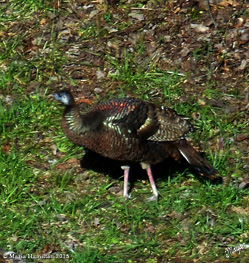 It is still uncertain whether or not Turkey really was the star of the feast shared by early colonists and native americans that gave birth to the American Thanksgiving Holiday tradition, but it is well known that they become fond of hunting the native wild turkeys. Hunted for both market and subsistence, and pushed out of their territories by habitat destruction, it is estimated that by the 1930s, only 30,000 wild turkeys were left in all of north america. A strong conservation effort, paid for mostly by wild turkey hunters, helped to repopulate this native bird. Over 200,000 wild turkeys were trapped and released into quality wild turkey habitats resulting in a modern population of over 7 million birds.
While earlier eras of hunters were part of the problem, today’s modern hunters are keenly aware that species and habitat conservation is vital to the continuance of their sport. The wild turkey is a clever and agile bird that is not easily stalked or caught by hunters. In order to have a real chance of success, the hunter must learn about their prey, their lifestyle, their language, habits and habitats. Serious hunters spend hours, if not days, quietly waiting in the woods and watching the local wild life. These countless hours of observations give many hunters not only knowledge of the wild turkey but often a deep respect for the woodlands and the wildlife that call it home. Among the wild turkey hunters that I know, wild turkey hunting is as much about being alone in the woods with nature as it is bringing home a bird. Even when they come home empty handed, they often come home with wild tales of rare sights seen on their excursion.
For all the great success of decades of conservation, the wild turkey is yet again loosing ground. As human populations grow, more wild lands are cleared for housing and other development leading to habitat loss of over 6,000 acres a day. In addition to lost habitat, there is also declining interest in wild turkey hunting which results in less funding available for conservation efforts. Most state wildlife agencies fund conservation efforts through fees paid for by hunters when they buy or renew their hunting licenses. Additional efforts are made by hunting groups like the National Wild Turkey Federation that promote land conservation and habitat improvement through education and programs like low cost seed distribution of food plants that are important to the wild turkeys. In the last ten years, fewer hunters, less funding and habitat destruction have led to states in the southeast seeing their wild turkey populations decline enough to cause concern for both biologists and hunters.
Read more about the decline over at Audubon: Wild Turkey on the Rocks?
At Ajila Ama Farm, we manage about thirty acres of land, most of which is wild woodland and prime habitat for our native wild turkeys. By preserving habitat and restricting wild turkey hunting on our land, we create a place that these beloved fowl can live and breed. Our organic farming practices also ensure that these wild birds have access to clean mountain waters and food sources. If you have land with good habitat for wild turkeys, consider sharing it with these wonderful birds. I have also sculpted and cast several molds for wild turkeys and will begin producing wild turkey mugs as an opportunity to share and encourage awareness of wild turkey conservation. Proceeds from the mugs will also enable us to keep more of our land wild and free for the turkeys to roam as well as fund turkey food plot plantings.
For more information about habitat conservation and improvement for wild turkeys or what to plant for them, visit the National Wild Turkey Federation
Heritage Breed Turkeys
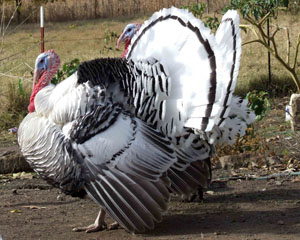
In earlier articles in this series, I described the plight of the domesticated turkey. The modern food processing industry raises only the broad breasted white, which has been bred for fast growth, large size and plentiful breast meat without regard for the health of the birds leading to their inability to fly or mate naturally. With the spread of diseases like bird flu, it is also unwise for an entire industry to rely on one single breed of turkey. In the same way that the historic Irish Potato Famine was the catastrophic result of relying on one single crop, heavy reliance on one breed of turkey does not guarantee a healthy future.
Over reliance on the modern broad breasted white turkey also means that most farmers and ranchers ceased to raise the healthier heritage varieties that were bred by early Americans resulting in steep declines in their populations. The Livestock Conservancy is an organization that has been working to preserve our national heritage by taking stock of the existing populations of heritage breed animals; publicizing critically endangered and threatened breeds, and encouraging farmers, ranchers and backyard bird keepers to raise and breed those most in need of assistance. Having raised turkeys, I know the risks they face from both predators and health problems. Many who raise poultry are well aware of the costs and hardships of keeping flocks alive and healthy. The efforts of backyard bird keeping enthusiasts alone will likely not be enough to save them and preserve their important genetic diversity. In order to raise the populations of at risk turkey breeds, more breeders and hatcheries are needed. These operations are no easy task to manage. One of the fastest ways to provide the funds and incentive to run these turkey hatcheries and breeding programs is to create a market specifically for heritage breed turkeys.
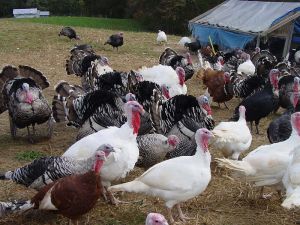
Much like organic farmers have sought to clean up the agricultural industry, many new poultry farmers and ranchers are hoping to change the way that we produce poultry by raising the healthier, but slower growing heritage breeds and allowing them as natural of a life as possible through free ranging, access to natural and organic foods and avoidance of the use of growth hormones, unnecessary antibiotics and other chemicals. Raising turkeys in a more natural way requires more land, more time, cost inputs and effort so you can expect to pay much more for a naturally raised heritage breed turkey than you would for a commercially produced bird at the grocery store. Most producers are small farmers who produce a limited quantity of these birds, so you may also have to pre-order a thanksgiving bird a year in advance or reserve an order for delicious turkey eggs. It may not be as easy as simply buying your turkey at the local chain grocery store, but by supporting these farmers, you will be helping to conserve these rare and threatened birds, and you will most likely be rewarded by better taste as well.
If you would like to try Heritage Turkeys or order one for Thanksgiving, you can use Local Harvest to find a local farm near you with heritage birds.
If you are interested in raising or buying heritage breed turkeys, the breeds currently listed by The American Livestock Conservancy as critically endangered are the Beltsville Small White, Chocolate, Jersey Buff, Lavender/Lilac and the Midget White. The Narragansett and White Holland are considered threatened while the following are listed as watch status- Black, Bourbon Red, Royal Palm, Slate, and the Standard Bronze. You can sometimes find rare breeds for sale through local listings on craiglists, ag newspapers, and at farmers markets. If you are not able to find any the desired breed locally, you can also check out the resources at the ALBC or do an online search for one of several heritage turkey hatcheries who have the ability to send live poults via mail order. (Please note, there will be a minimum number for mail ordered poults as they need the collective body heat to stay warm and you will need to be available to receive and open your precious package without delay.)
I hope that in the future as I improve my knowledge and skill of glaze colors and techniques, I will be able to sculpt a line of pottery products to represent the various heritage breed turkeys and perhaps use the proceeds to fund a future heritage turkey breeding program on our farm.
If you would like to learn more, please visit The Livestock Conservancy’s Heritage Breed Turkey page.
Stay tuned for the next post series Making Turkeys, where I will show you how I sculpt turkeys and make some turkey mugs!


One Comment Add yours