“What We Leave Behind Is As Important As Where We Came From”
This is the slogan I created for my pottery business. It not only conveys my commitment to environmentalism, conservation and preservation of traditional skills and cultural heritage, but embodies the often overlooked values that are passed down through generations of family.
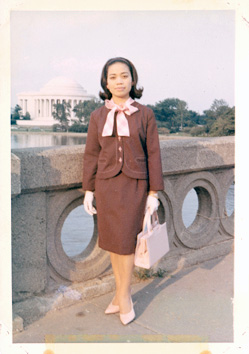
My mother came from a large, poor family in a rural village in the Philippines, but upon her arrival in America in the early 1960s, most would never have guessed that about her. She knew very well how to dress and present herself as a modern working woman in an era that adored the styles of prominent figures such as Jackie Kennedy. In her early 20s, her model behavior, attitude and fashion sense earned her a job with the Feltman Brothers, a prominent children’s clothing manufacturer. Her job included dressing manikins and windows in luxury retail shops on 5th Avenue in New York City.
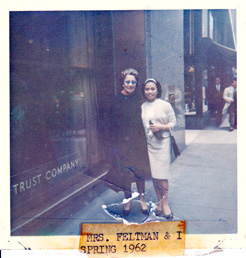
She was chosen because she could blend in with high society and offer wealthy customers the respect and customer service they expected. None of them would have guessed that she only had a small wardrobe of fine clothes, shoes and accessories which she maintained ever so carefully with delicate hand-washing, line drying and proper attention to care. Without these, she would not have been able to keep her job. She was cautious to only buy items of good quality that would last for years to come. My mother continued to care for her clothes and other material items with great care for the remainder of her life. When she passed away from ovarian cancer in 2011, I inherited her wardrobe along with other items.
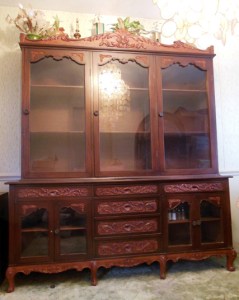
I was quite shocked to discover that many of the items she had bought in the early 1960s were still in excellent condition despite their age. After fifty years they still looked as nice as the day she bought them. In addition to clothing, she had a house full of fine furniture including intricately carved wood furniture which she had dusted and oiled religiously for a lifetime. She had carefully chosen many items of home decor during the 1970s when she and my father briefly operated a businesses importing goods from the Philippines to the United States. Growing up my parents never saw the need or had the desire to trade in these furnishings for the latest fads or styles. My mother preferred timeless styles and high quality items meant to last and become heirlooms that could be passed down through generations. I have always assumed that the lack of material possessions in her youth, the inability to afford ‘nice things’, was a contributing factor in appreciating the things she did have and treating them with great care and respect. Instilled in me is a deep desire to care for the things I have inherited with the same passion and loving attention. To me these have much greater meaning and value than any item I could buy in a store today.
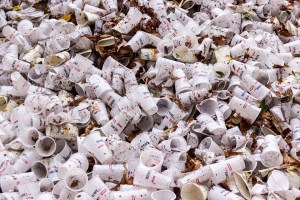 Over the last few decades there has been a monumental shift in american consumerism. We have collectively left behind the values of our grandparents generation. We no longer care about buying or making high quality items built to last for generations. Most manufacturers have chosen to incorporate obsolescence and to promote the repeated purchasing of cheap, disposable goods. Oh how much more convenient the paper plate is to use and throw away than washing a ceramic one. While my mother may have used paper plates for picnics, she would wash a pile of sturdy plastic divided plates after throwing a party for a hundred people. She was also known to wash and reuse ziplock bags, turn her torn towels into wash cloths, send her unwanted clothes to her family in the philippines and in general be thrifty and make the most of everything and try to give things the longest life of use possible.
 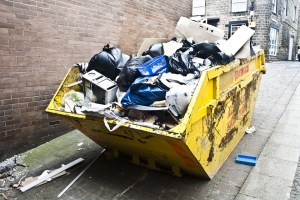 Contrast this to today’s modern fast fashion where we are encouraged to buy cheap clothes, wear them once and throw them away; or commercials that encourage us to have purposefully destructive ‘accidents’ happen to our expensive cell phones so we have an excuse to buy the newest model even though the old one is barely old at all. You can buy a ceramic coffee mug at most retailers for only one dollar, but ‘cheap’ offers us no incentive to care for the mug at all. Most are fine to use these items carelessly and when they are broken, stained or soiled, simply throw it in the garbage can and buy another.
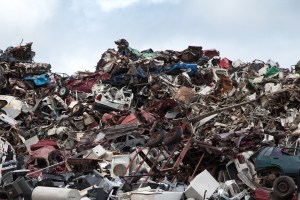 Unfortunately the new values of cheap, disposable consumerism take a great toll on both the environment and all the unseen workers who are used and abused in order to produce such cheap goods. They neglect to acknowledge dwindling resources, poisoned communities, loss of species and other harm that is a side effect of our production systems. Overburdened landfills and waste disposal have become serious universal problems to the point that many developed countries simply pile their garbage on ships and pay poorer countries to take it off our hands. I think that most people would agree that such over-consumption and wastefulness is simply not sustainable, but we seem too addicted to convenience and low prices to change our habits and stave off what is likely to be an unstable and unhealthy future.
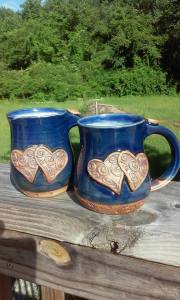 As a potter, my aim is to create both quality and value. I am studying with an experienced potter to learn how to produce the best quality pottery so I can make items that will be durable and long lasting. I also want to use my design skills to ensure that the functional items I make are as useful as they can be. My product design education illuminates the fact that if a product is not easy to use people will become annoyed and dissatisfied with the product and most likely throw it away and replace it with something better. I also hope to create artistic and original work that people will truly appreciate; that they will care for; and like my mother, hopefully pass down for generations. Each time I am able to make a coffee mug that becomes someone’s “favorite mug”, I know that I have created an item that will be used often and well-cared for because a customer values it and gives it meaning and purpose beyond simply holding coffee. Perhaps it serves as a reminder of a pleasant memory or a generous friend; reflects their personality and interests; gives them inspiration or courage; or puts an extra smile or laugh in their day. Whatever the reason may be, for every treasured ‘favorite mug’ or other items that see years of use, countless ‘cheap, disposable’ items loose their value and necessity. They might even also help people to return to the values of previous generations and encourage us to invest again in seeking high quality items meant to last and to care for them well. If consumers desire this and vote with their wallets, manufacturers will return to producing long lasting high quality goods and abandon built in ‘obsolescence’.
Ah, but what if we don’t deal with these issues which are slowly destroying the earth, our health and communities or encouraging us to abandon knowledge and learning traditional skills. I mean who needs to know how to make a pottery coffee mug which takes countless hours of effort to make when you can buy a cheap mass produced one at the dollar store. I love armchair archaeology and ancient history and know that pottery can actually last indefinitely if well cared for. Much of what we know about ancient civilizations comes from unearthed pots that tell us about the people and the lives they lived long after they themselves are gone. It is not impossible to imagine that a collapse of existing society could happen and if you consider the popularity of zombies and other apocalyptic entertainment, many people are already imaging it or fearful it could happen. If you could no longer simply go to the store and buy things, you would be forced to find those left behind or make them yourselves. However, you can only make them yourself if you or someone else has preserved the necessary knowledge. In this kind of scenario, knowledge would become more valuable than money which would probably be fairly worthless.
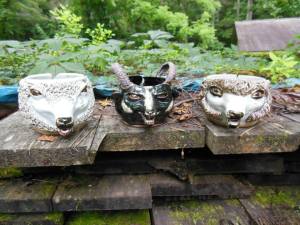 Not only do I wish to preserve traditional skills such as how to make pottery, you know, just in case; I choose to use the pottery itself to preserve knowledge and like the ancient pots unearthed by archaeologists, leave behind clues to knowledge that created many of life’s necessities for centuries. Special collections of my yarn bowls feature fiber producing plants and animals in the hopes that if they are needed, some future people may unearth them and re-discover the traditional wisdom of fiber arts. Hey, why does this bowl have this weird cut in it and what kind of plant or animal is this? What did they use this for? Is the plant related to the use or just decorative? I also have plans to create other product lines which capture knowledge and combine them with use and form, such as putting sculpted cows on milk pitchers, or salad plants on salad bowls, etc. Who knows what might happen or where my pots will end up. I know that my pottery can and likely will last well beyond my own lifetime, which is why I say ‘what we leave behind is as important as where we came from.’ – by Maya Hamilton
 Heritage Vision Creations