
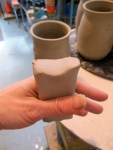
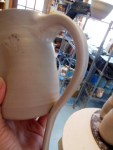
 Last week, after a long winter hiatus from pottery, I made several dozen handles for mugs. Not having made any in a while, my confidence wasn’t so great and at times I knew my technique could use improvement. The handles were too thick here, too thin or too wide there. I knew that a few might not make it through the bisque kiln process, but I was still quite dismayed when I found out slightly less than two dozen did not make it, had to be discarded and would likely end up broken into gravel. Pottery is not an art for the easily discouraged. On the contrary, since I started my journey in clay, I have discovered that I really like potters, not just as artists, but as admirable people with an immense amount of patience and perseverance who are not averse to risk, failure and learning from their mistakes.
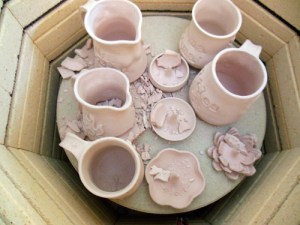
In my lifetime I have encountered many people who let their lack of confidence and fears of failure prevent them from trying things they had a passion to do. From learning to cook or dance, or turn a hobby into a business, many would rather not try at all than risk failing. I think it’s natural for people to be embarrassed about making mistakes and especially in the age of social media, we feel compelled to present a false image of perfection. The truth is that we all make mistakes and it is these mistakes that help us learn and grow. Failure can actually be a great and useful teacher.
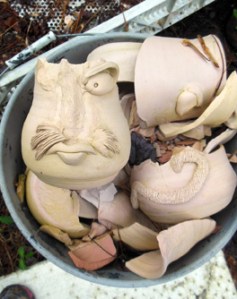
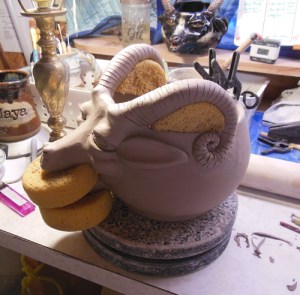
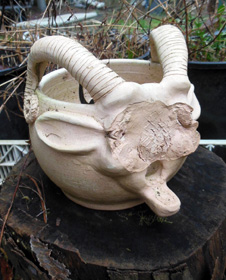
For this blog post, I have decided to share some of my many failures, the kind of work that is rarely ever seen as artists strive to always show their best work. I add many sculpted features to my pottery mugs and bowls. Neither the thrown piece or the added features can be more wet or dry than the other, so potters must always judge the clay and juggle timing of work, and fairly often make the decision that one has waited too long. The added clay must also be applied properly or it will not bond with the clay body of the main piece and the work must also be thoroughly dry before going in the bisque kiln. Potters are free to ignore their mistakes, rush ahead or cross their fingers and hope everything comes out o.k. However, the bisque kiln is a rather impartial judge of poorly executed techniques and timing. If a piece was not dry or well made, odds are good that it quite literally ‘can’t take the heat’. Experienced potters quickly learn from their bisque kiln discard piles when to admit a pot has problems and is most likely never going to survive the firing process. These clay pieces, often while still wet, are squished, sometimes with a momentary ‘argh’ of frustration or disappointment, and then the potter throws another ball of clay on the wheel and begins again.
“Only those who dare to fail greatly can ever achieve greatly.” – Robert F. Kennedy
From Thomas Edison and Henry Ford to Bill Gates and Steve Jobs, inventors, like experienced potters, know that trial and error is often imperative to future success. While Silicon Valley entrepreneurs have chosen ‘fail fast, fail often’ as a mantra, inventors and potters are not the only people who understand that perseverance matters. Many great artists suffered repeated rejection before becoming successful.
Famous artists like Vincent Van Gogh and Claude Monet were ridiculed and criticized during their lifetimes. They would not be appreciated until long after their death, but today they are considered masters of their art. Elvis Presley is also well known to have failed early music auditions and been told he was an awful singer before improving his skills and becoming a rock and roll legend. Harland David Sanders, better known as KFC’s Colonel Sanders, had his now famous ‘secret recipe’ rejected by over a thousand restaurants. From great art and music to automobiles, smart phones and fried chicken, much of what we enjoy and appreciate would not exist if their creators had simply given up when faced with disappointments and failures.
There are probably plenty of times when ‘quitting’ is appropriate. You are probably not going to win the powerball lottery or the big jackpot at the casino. If your mother is the only person who likes your singing, you might need lessons or to give up on becoming a famous singer. Perhaps an idea or project you thought would work, simply won’t. More than likely, you will find yourself in a dead end job at some point that doesn’t make you happy or provide a living wage. You may also find yourself living in a place without real opportunities to use your particular skills or experience. In some cases, a change or a new approach might be the best thing for you. It can be frightening to start over, but if we embrace uncertainty and risk, we may also find ourselves delightfully surprised.
I took up pottery to make a little extra money when it became apparent that the local economy was not going to support my desire to make a living doing graphic design or farming. I had no idea it would be an opportunity that would open up a whole new world and a business opportunity for me. I had always loved sculpting but I had never dreamed of being a potter or that I might become good at it. Had my previous venture not been failing, I doubt I would have rediscovered my passion for clay. Quite a few of the potters I have met share a similar story. They had reasons to leave a previous career, job or location and were at a loss for where to go or what to do next. Some stumbled into a potter’s studio looking for work or took a class for want of something to fill the time until they thought of a new direction. Others found an enjoyable hobby and only turned it into a business as friends and family and then friends of friends repeatedly asked for their artwork. Perhaps we are not very good at predicting the future and that is not always a bad thing. A little uncertainty leaves room for surprise.
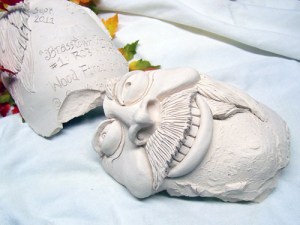
“It’s not the load that breaks you down, it’s the way you carry it.” -Lou Holtz, former football player and coach.
Whatever you are doing, accept your mistakes as part of the learning process. Let them inform your next attempt, but don’t take failure so personally or seriously that it prevents you from trying again. For many arts and businesses, try, try, and try again is the only way to discover what will work and succeed, but also be honest when it is enough and time to move on to something else.
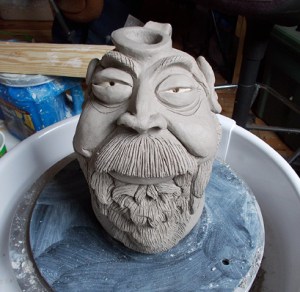
If you find something you are really passionate about, especially if your friends and family also support your goal and think it’s a perfect fit for ‘you’, then don’t be easily discouraged or let small mistakes weight too heavily on your decisions. Practice often, try different approaches, and ask yourself if you have been working hard enough. Recognize that slower than expected growth or results doesn’t mean you won’t eventually achieve your goals. Be positive, patient and persistent. You never know what you can really do until you can try and you won’t try often enough to be successful until you can learn the fine, but challenging skill of handling disappointment. – Maya Hamilton

