The Turkey Factory and Farms of My Youth
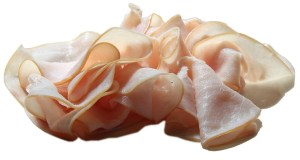 Turkey was not just a Thanksgiving meal in the home I grew up in. My mother spent twenty years working in a large turkey manufacturing plant. The company offered a good employee discount and my mother utilized it often to save on grocery bills. Our freezer contained every product that could possibly be made with turkey meat, which was quite an array. We had ground turkey, turkey bacon, turkey ham, turkey sausage and even turkey filet mignon. Both my mother’s salary and a large chunk of the local economy were derived from the sale of processed turkeys. Scattered throughout the county side were poultry farms. The roads which formed the route to the processing plant were well marked with layers of turkey feathers blown off the many passing trucks. Turkey was having a hay day as part of a healthy diet and sales were excellent. The company threw elaborate family day festivals for their employees with free food and inflatable rides for children. It was a jovial time.
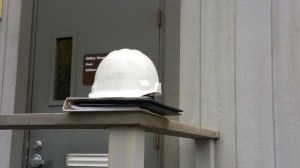 Beneath the fanfare though was a darker reality for both turkeys and the plant employees. My mother, like many employees, developed carpel tunnel syndrome and other health problems from repetitive line work. It was a massive plant with lots of equipment, thousands of employees and plenty of safety hazards. Once a massive mechanical door fell on her head. She was lucky to have been wearing a hard hat that minimized the damage, but another worker was not so prepared or lucky. I remember my mother getting quite upset and saying that they are suppose to look out for their workers. I agreed with her and got her some information about OSHA. She went to work armed with those four letters and insisted they make the plant safe for the workers. She would also eventually organize a worker-led safety inspection team to minimize hazards for the employees. I can actually say that today they do have a stellar safety record in regards to preventing accidents, but the risk of repetitive motion injuries is still a concern for many workers.
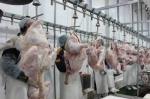 My mother’s first job was on a line cutting up turkeys, which also happened to be just a short walk past the kill room which I briefly peeked into while tagging behind my mother on a tour to see where she worked. One momentary peek turned into a surreal memory. Up above me, an unimaginably large amount of turkeys were strung by their necks on a moving contraption that wrapped around the room like a very efficient snake using every foot of space. Amid a loud cacophony of gobbling, the whole contraption jerked with a swift motion and the room fell silent. Tiny white feathers drifted down from the ceiling like snow and soon after the motors that move the turkeys on their journey through the plant kicked into gear. The whole thing happens in an instant and while it is very effective, it is still on the whole a little disturbing, especially when you see the many trucks being unloaded throughout the day.
The turkey farms which are scattered about are also not the most inviting places. I once had some car trouble on a rural road with only a turkey farm and a few mobile homes for workers. The gates and fences to the turkey farm were well marked with hazard signs, quarantine zone and other information that certainly made you want to ‘keep out’. I know now that much of the quarantine information is to keep the birds safe and to prevent diseases among them, which tend to happen more frequently when you are really packing the birds in. Now a days, automation takes care of most of the watering and feeding of the birds. Some workers just walk through with a wheel barrow and keep an eye out for birds that have expired. Sometimes a ‘bird flu’ befalls these turkeys and there ends up a shortage of dinner birds for thanksgiving that year, but more poults are hatched the following spring and the modern turkey cycle begins again. The many turkeys are crowded into their long warehouse like spaces fighting for spots at the automated dispensers until they are big enough for their final trip, which typically takes about six months for modern broad-breasted white turkeys.
I honestly didn’t know what to think about the turkeys. It seemed like a rather sad life and adults tended to assume the birds were pretty stupid, so eat your turkey sandwich and be happy was all anyone cared to say. In a town where most people were employed by the plant, it also wasn’t wise to truly ‘talk turkey’ about the turkeys. I would wait until I was in college and in need of a theme for an art installation project to explore the dinner turkeys and the rest of the food processing industry. In addition to turkeys, the area I grew up in also had quite a few chicken and pork processing plants as well. I became quite curious about why we ate what we did and where our food actually came from. These childhood experiences were the beginning of a long journey I would begin regarding food and food production that would inspire me to start an organic farm.
…continued in Talking Turkey (Part 2)


One Comment Add yours